
Why does a marriage start to feel like a roommate arrangement?
If you and your spouse feel like roommates, you have probably already tried the obvious repairs. You booked the date night and spent most of it on the contractor's schedule. You took the weekend away and came home rested and no closer. At some point one of you may have decided this is simply what marriage looks like with two careers and children, and on busy weeks you both almost believe it.
When a married couple starts to feel like roommates, the marriage has usually become a logistics marriage: two people who run a household well and have stopped finding out anything new about each other. Most couples in this place still love each other. What has gone is any conversation that isn't about the next thing to be handled.
That definition matters because it changes what you're looking for. A logistics marriage is quieter than a troubled one. Nobody is slamming doors. The calendar is accurate, the kids get where they're going, and the two of you are, by most measures, a very good team. It's one of the most common reasons couples come to see me in Sarasota and Lakewood Ranch.
John and Julie Gottman, the psychologists who have studied couples for decades and whose method I'm trained in, call the small moments when one partner reaches for the other "bids." A bid can be a comment about something in the news, a hand on a shoulder on the way past, or a sigh that is meant to be asked about. In a logistics marriage the bids don't stop, and they come from both sides. They get answered with information.
The bid
Answered with information
My mom sounded old on the phone today.
Hey, is she still coming for Thanksgiving?
A photo of the beach where you honeymooned, sent midday
👍
A hand on your back while you're in the kitchen making dinner
“Can you get out of the way while I cook?”
Is this just a busy season?
Sometimes it is, and the way to tell is whether it lifts when the season ends. A product launch, a new baby, a parent's illness or a move can flatten a marriage for months, and most couples find each other again afterward.
It's worth looking harder when the busy season ended and nothing changed. When you can plan the kids' summer down to the carpool and haven't talked about your own next ten years. When she feels a small relief on the nights he works late, or he feels it on the nights she travels, and whoever feels it carries a small guilt about the relief. Those are signs the distance has become the arrangement.
How did we end up here when nothing went wrong?
Usually through competence. Capable couples divide the work the way a good team does. One of you owns the finances and the other owns the school. She handles his mother, he handles hers, and the house gets split down the middle. Each of you gets very good at your half, and the system runs with less and less need to talk.
That system was built to keep a household running, and it does. It was never asked to keep the two of you curious about each other, and nothing in it notices when that stops.
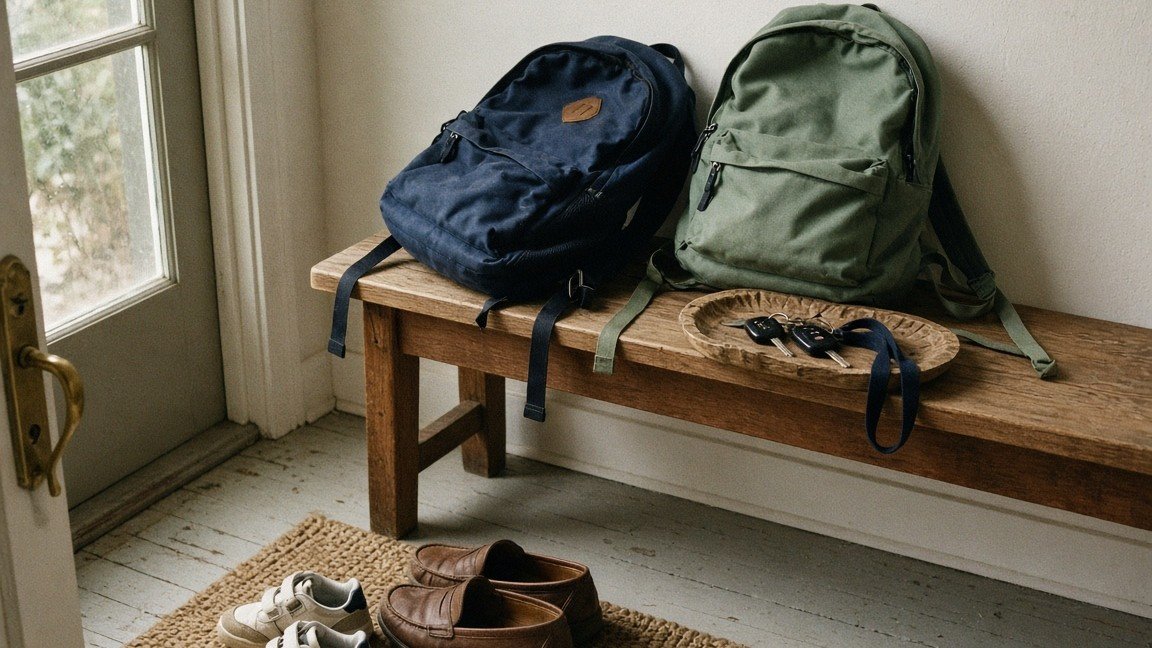
Each of you also tends to carry a story that makes the distance reasonable. One of you often thinks things are fine, because nothing is on fire and the other seems to have it handled. The other often suspects their spouse doesn't notice, or doesn't mind, and has stopped raising it because raising it hasn't helped. In some marriages the husband carries the first story and the wife the second, and in plenty of others it runs the other way. Both stories spare you a harder conversation, and both leave out the part where each of you is lonely.
What does it sound like when it goes wrong?
It often goes something like this, and either spouse can be the one who starts it.
“I feel like we never talk anymore.”
“We talk all the time. We talked this morning about the Hendersons’ party.”
I miss you.
A complaint about his performance.
“I miss you. I don’t mean I want more date nights. I mean I miss knowing what you’re thinking about when you go quiet in the car.”
It’s harder to say, because it shows him you’re lonely, and much harder to argue with.
Can a marriage come back from emotional distance?
Often, yes. In my experience, distance responds to the work more readily than contempt does, because most of the goodwill is still there. What makes it hard is that distance is easy to live with. Couples in a logistics marriage can go years without a crisis that forces the conversation, and the longer it runs, the more each person builds a life that doesn’t need the other one in it.
Coming back usually takes more than adding time together, because time alone doesn’t touch what the efficiency has been doing for each of you. For some people, running things well is how they stay useful when they don’t know how to be close. For others, it’s how they stay safe after closeness stopped feeling reliable. Those reasons are rarely visible from inside, and they are usually what has to change.

Signs to take seriously
When is it more than a scheduling problem?
When you've tried to fix it yourselves and keep ending up in the same place. Some specific signs:
- You've raised it more than once, and it ends in defensiveness or in nothing.
- One of you has started making plans, about money, travel or the years after the kids leave, that the other isn't part of.
- One of you feels more at ease when the other is away.
- One of you is closer to leaving than the other and hasn't said so.
The last one deserves its own note. If one of you is unsure whether to stay, ordinary couples therapy tends to stall, because it assumes both people are working on the relationship. Discernment counseling is built for that situation: a short, structured process for deciding whether to try, before either of you is asked to try.
About the author
Julia Loewi
I'm Julia Loewi, MSW RSW LCSW-QS CFSW, a psychotherapist with offices in Sarasota and Lakewood Ranch. Most of the couples I see are doing well by every outside measure and have drifted into the kind of marriage this post describes. In the room, I slow down the pattern the two of you run, name it while it's happening, and ask the questions that efficiency has made easy to skip. My work is grounded in psychodynamic therapy, and I'm trained in the Gottman Method at Level 3 and in Emotionally Focused Therapy. I spent more than 15 years at Canada's largest mental health and addictions teaching hospital. Sessions are private pay, in person or virtual across Florida and Ontario. Learn about couples therapy at Reclaim.
Questions
Frequently asked questions
Is it normal to feel like roommates with your spouse?
It's common, especially for couples with demanding careers and children, and common isn't the same as fine. Most long marriages go through stretches of distance. The concern is when the stretch has no end in sight and neither of you can raise it without the conversation turning into a defense of how well the household runs.
What if my spouse doesn't want to go to couples therapy?
Book the consultation anyway. A reluctant partner will often agree to one conversation more readily than to "therapy." Many of the couples I see started with one person more willing than the other. If your husband or wife still won't come, individual sessions can help you understand your side of the pattern, and that tends to change the pattern itself.
How long does couples therapy take for emotional distance?
There isn't a standard number, and a figure given before anyone has met you is a guess. It depends on how long the distance has been building and what sits underneath it. After the first few sessions I'll tell you what I think the work involves, and we'll check that against what you're seeing at home.
Can we do couples therapy virtually?
Yes. I see couples virtually anywhere in Florida and Ontario, and in person in Sarasota and Lakewood Ranch. Some couples mix the two, meeting in person when schedules allow and online when one of you is traveling. Virtual sessions work well for this kind of work, as long as you can both be somewhere private, together, without interruption.