
Where couples begin
The fight you bring in is where the work starts
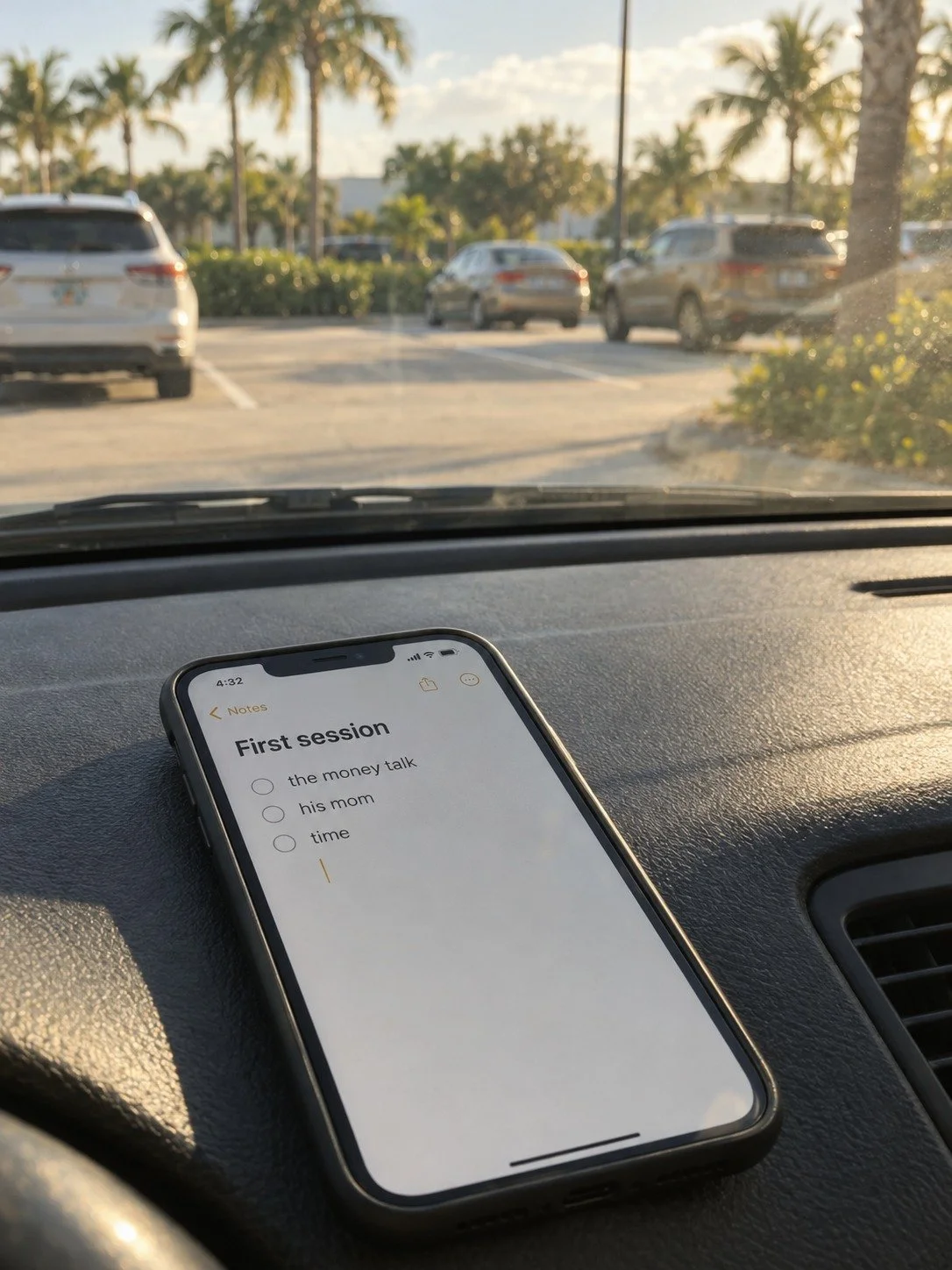
Most couples arrive with a topic ready. It might be the last fight, or "communication," or a list one of you typed into your phone in the parking lot. That's a reasonable place to start, and it's where we will start.
Most topics for couples therapy come down to whatever keeps repeating: the fight you've had forty times, the decision you can't make, the thing one of you has stopped mentioning. What you bring in is usually the entry point, and within a few sessions the real subject shows up underneath it. That's where things begin to change.
I call this the presenting fight: the argument a couple brings to therapy, which is real but stands in for a disagreement neither person has said out loud.
The real subjects
What do couples actually talk about in therapy?
These are the subjects that tend to surface once the presenting fight gets out of the way. They come in no particular order, and most couples find two or three of them.
01
Who decides.
Couples who say they can't communicate are often fluent everywhere else. They run meetings, manage staff and talk difficult clients down. At home, the fight about tone tends to be a fight about authority. It shows up in whose career sets the calendar and who gets the final word on the house, the school, the move.
02
Money.
The budget is rarely the real subject. Two people can fight about a $90 dinner as though the marriage depended on it, because one of them grew up being told money was for enjoying and the other grew up watching it run out. That kind of fight usually has a family history behind it, which is where my financial therapy training tends to come in.
03
Family loyalty.
A parent who calls every day. Adult children from a first marriage. A family business where the marriage and the job share a dinner table. Sooner or later one of you has to say which family comes first, and that conversation goes better with someone in the room who will keep it from turning into a trial.
04
A breach.
Sometimes it's an affair, a financial secret, or a decision one of you made alone that should have been made together. Some couples come in because of it. Others come in about something else entirely, and the breach comes out in the fourth session.
05
What each of you expects the other to fix.
This one is harder to hear. Some of what one partner asks for is beyond what any other person can give. No spouse can make a driven person feel content, or repair what happened to them at eight years old. Seeing that clearly is a relief more often than it's a disappointment.
06
Whether you're staying.
Sometimes one of you is closer to leaving than the other. If that's you, say so, because a therapist can't help with a question nobody has asked. When the gap is wide, discernment counseling is often a better fit than regular couples therapy. It's a short, structured process for deciding whether to work on the marriage at all, and it doesn't require the two of you to want the same outcome going in.
Before the first session
Do we need to agree on a topic first?
No, but it helps if each of you knows what you want to be different. That's a separate question from what to talk about. "I want us to stop having the same fight about your mother" is a goal. "Your mother" is a topic, and a risky one to open with.
If one of you made a list, bring it. Most lists look different by the third session, and the change is useful information.
Preparation
How do I prepare for couples therapy?
- Start with your own part.Your partner's is easier to see, and you could probably describe it in your sleep. The more useful question is what you contribute to the pattern: the line you always say, or the moment you go quiet. You don't have to announce it in the first session, but it helps to know it before you walk in.
- Name one specific goal.Put what you want into one sentence, specific enough that you'd notice if it happened. "I want us to stop going to bed angry" is a start. "I want us to be able to finish an argument before ten at night" is something you can both check.
- Skip the car debrief.Agree beforehand not to replay the session in the car. The drive home is where couples redo the hour with nobody there to slow it down. Give it a day before you talk it over.
Timing
When is it worth starting?
Couples often wait until there's a crisis, and by then the pattern has usually been running for a long time. A few signs suggest it has grown bigger than the two of you:
- the same argument returns no matter what you agree to
- one of you has stopped raising things because it isn't worth the fight
- trust hasn't recovered after a breach, even though you've talked it through
- a major decision about a move, a child or the business keeps stalling
If one of you has said "it's over" during a fight and neither of you knows whether it was meant, that question needs an answer sooner rather than later.
Getting started
You don't need the answer before you book
You don't need to know what the real subject is before you book. Most couples don't, and working that out is what the first sessions are for. A consultation is a chance to describe what's been happening and find out whether working together makes sense. I see couples in person in Sarasota and Lakewood Ranch, and virtually across Florida and Ontario, on a private-pay basis. If your partner isn't sure about coming, you can still book it on your own, since plenty of couples start with one person making the first call.
Book a consultationCouples often ask
Frequently asked questions
What are common topics for couples therapy?
Communication is what most couples name first. The work usually turns to who makes decisions, money, loyalty to family, a breach of trust, and whether both partners want to stay. Most couples find that two or three of these sit underneath the fight they came in with.
What should I say in my first couples therapy session?
Say what you want to be different and what you think your own part is. You don't need a full history or a list of complaints. The first sessions are for getting the shape of the relationship, so a plain, honest account is more useful than a prepared case.
What if we don't know what to talk about?
That's common, and it's fine. Start with the most recent argument, even if it seems small. The details of an ordinary fight usually lead to the real subject faster than a planned topic does.
Can couples therapy make things worse?
It can feel worse for a few weeks, because things that were avoided start getting said. Part of my job is helping you tell that apart from the relationship actually getting worse.
What if only one of us wants to go?
Start the conversation anyway, and be honest with your partner about why you want to go. Some reluctant partners agree once they understand it isn't a trial. When one of you is unsure about the marriage itself, discernment counseling is often the better place to begin.