


Couples, individual, and family therapy in Sarasota & Lakewood Ranch
You have built a life that works.
Something important inside it no longer does.
At Reclaim, we provide personalized couples therapy, marriage counseling, individual therapy, and family therapy with in-person office locations in Sarasota and Lakewood Ranch, Florida, and convenient telehealth services throughout Florida and Ontario, Canada. Led by Julia Loewi, MSW, RSW, LCSW-QS, CFSW, Reclaim works with high achievers, professionals, and their partners on the problems success doesn't solve: broken trust, emotional disconnection, money conflicts, and the toll a demanding career takes on a marriage. Whether you prefer meeting face-to-face or online, the work is private, direct, and built around the realities of a full life.
You are not alone in this
You can be highly capable and still be deeply stuck in one important part of your life.
If that sentence landed, you are in the right place. It may be a marriage, a family, a career, or a decision you keep circling. Often it is more than one. You do not need to know which before you begin.
You may be hoping for
- More ease and connection in an important relationship
- Better conversations when something difficult needs to be said
- Greater confidence in decisions affecting your family
- Clarity about what you need and what you can change
- Space to understand your own experience
But find yourself
- Repeating the same conversations without resolution
- Feeling disconnected from someone you love
- Carrying more than feels sustainable
- Avoiding a decision with real consequences
- Functioning well externally while feeling privately stuck
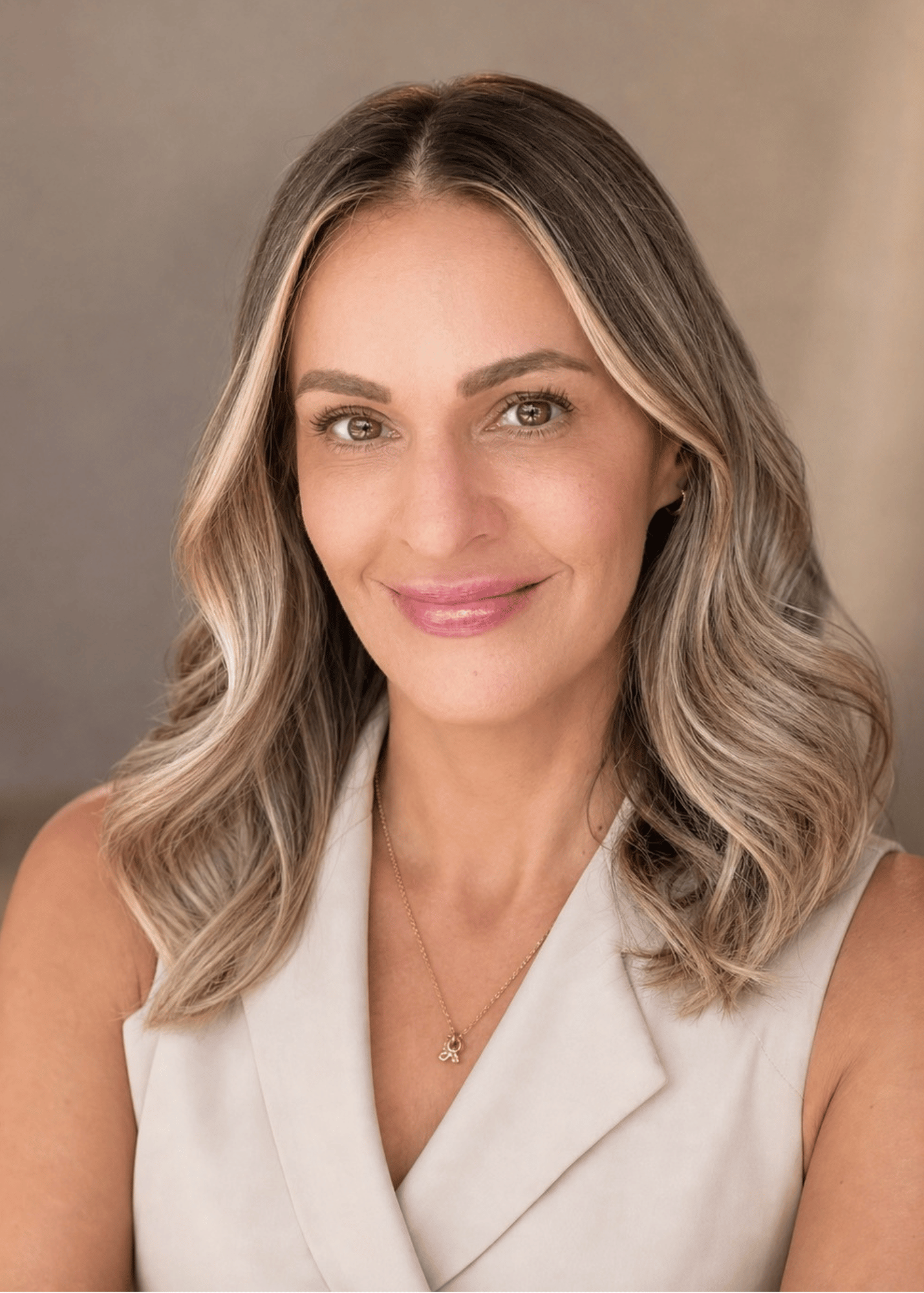
Where I focus
Relationships may be the one part of life you cannot solve by trying harder.
Most people I see are not failing. They are capable, responsible, and used to solving difficult problems. Careers are going well. The house runs. From the outside, almost everything looks well-managed.
Privately, the relationship has gone tense, transactional, or quiet. Conversations about money, sex, parenting, time, or the future turn into the same argument, or stop happening at all. What used to be a partnership has become a logistics operation between two people who are perfectly polite to each other.
Often, one person is still trying. Everyone else has disengaged or given up, and somewhere along the way the one still trying started to feel like the problem. Sometimes the real question is not how to fix it, but whether it can be fixed. That is a question worth answering well, and it is where I often begin.
experience you can trust
Two decades of clinical work, most of it in the room with couples.

The framework
The hidden cost of success.
Success quietly takes its toll in four places. Most people fight about the surface.
Ways we can work together
Care for the relationship, the person, and the family
-
![Couples Therapy Sarasota]()
Couples Therapy
For couples in Sarasota and Lakewood Ranch navigating disconnection, recurring conflict, betrayal, trust rupture, parenting strain, financial stress, or a relationship that has become more logistical than connected.
-
![Discernment Counseling]()
Discernment Counseling
For couples where one partner is leaning out and the other wants to keep trying, with a short, structured process for deciding whether to recommit, separate, or take more time before choosing.
-
![Sarasota therapy office]()
Individual Therapy
For people carrying more than others can see — including professionals, leaders, business owners, and the person at the center of everything —whether you are navigating burnout, ADHD, relationship stress, identity shifts, or a consequential decision.
-
![Couple managing busy schedules]()
ADHD in Marriage
For couples where adult ADHD has shaped the marriage, with one partner running the household from memory and the other feeling like a permanent disappointment, whether the diagnosis is years old, recent, or still a suspicion.
-
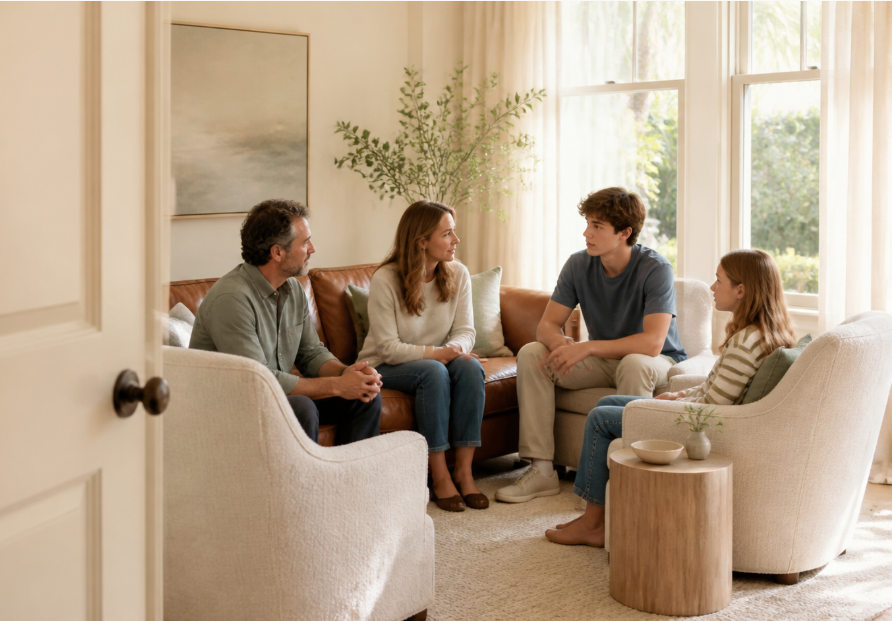
![Family having a conversation in a bright, cozy living room]()
Family Therapy
For families navigating distance, conflict, changing roles, competing loyalties, inheritance, succession, financial power, and the questions that become harder when everyone has history together.
-
![Intensive therapy space Sarasota]()
Intensives & Concierge Care
For clients who need more concentrated support than weekly therapy allows, including extended sessions, focused therapy intensives, and thoughtfully structured care for demanding professional and family lives.






MY APPROACH
Warm doesn't mean passive.
I listen carefully. I also ask difficult questions, name the patterns I am seeing, and challenge the assumptions keeping you stuck, including the comfortable ones. Therapy should give you somewhere to think differently, not simply somewhere to repeat what you already know.

A CONSIDERED PLACE TO BEGIN
What Working Together at Reclaim Looks Like
The first conversations are designed to help us understand what has brought you here, what support may be most useful, and whether working together feels like the right fit.
-
01
A Confidential Consultation
A brief, private conversation about what is bringing you here and whether working together makes sense.
-
02
Understand the Pattern Beneath the Problem
Early sessions look beyond the immediate problem to the relationships, history, patterns, and pressures shaping it.
-
03
Create a Thoughtful Plan for the Work Ahead
Together, we determine what deserves attention and the structure of care most likely to be useful.
Words from past clients, students, and colleagues
What People Are Saying
“My husband and I are both successful professionals, and we came to Julia after years of having the same arguments (or sometimes not talking at all)…Julia's intellectually sharp and perceptive. We're both fast talkers and tend to jump five steps ahead in a conversation, but she was always able to keep up, connect the dots, and bring us back to what actually mattered. She's also warm and compassionate, but challenged us when needed. Neither of us felt blamed, and neither of us was allowed to stay comfortably stuck in our own narrative.”
— Sarah T.
“I came into my second marriage with a lot more assets than my wife, and I felt responsible for protecting what I'd built. I didn't see how often that left her feeling like she didn't have a real say in big decisions. Julia helped us see that the fights weren't really about money. They were about whether my wife felt like a partner. Now we make financial decisions together, and it's brought us closer instead of pushing us apart.”
— Michael L.
“I’ve known Julia for over 10 years and refer many couples and individuals to her. She's very experienced, but what I notice most is how astute she is. She pulls together history, relationship dynamics, and what's happening right now, and sees the pattern underneath. Clients tell me she said something they'd never considered that changed how they understood their situation. Her judgment on challenging situations is sound.”
— Rachel Goldberg, LMHC
A PRIVATE PAY PRACTICE
A Deliberately Private, Flexible Model of Care
Your therapy should be organized around your life, not an insurer’s definition of medical necessity. Private pay means we focus on what’s actually happening, whether that’s a relationship, a consequential decision, money, professional pressure, or a transition. It allows for flexible session formats, intensives, and a level of discretion that matters when privacy is a real requirement.
Superbills are available for clients pursuing out-of-network reimbursement where clinically appropriate

In-Person Couples Therapy & Counseling in Sarasota, FL
Reclaim offers in-person couples therapy, marriage counseling, individual therapy, discernment counseling, individual and family therapy, and intensives at our downtown Sarasota, Florida office. We help clients address emotional disconnection, infidelity and affair recovery, financial disagreements, anxiety, burnout in high-achieving professionals, family business and inheritance strain, and significant life transitions.
Our Sarasota office also welcomes clients from nearby communities, including Siesta Key, Longboat Key, Palmer Ranch, and West of Trail.
In-Person Therapy & Marriage Counseling in Lakewood Ranch, FL
Our Lakewood Ranch office provides in-person counseling for individuals, couples, and families seeking discreet, professional relationship and mental health support. Services include couples therapy, marriage counseling, ADHD relationship counseling, discernment counseling, financial therapy, individual psychotherapy, and family therapy.
We also welcome clients from Bradenton, University Park, Skye Ranch, and surrounding communities who prefer in-person counseling at our Lakewood Ranch location.
Online Therapy & Telehealth Throughout Florida
Reclaim offers convenient, confidential online therapy for clients throughout the state of Florida. Whether you live in Tampa, St. Petersburg, Clearwater, Orlando, Miami, Fort Lauderdale, Naples, Jacksonville, or another Florida community, telehealth allows you to access professional counseling without traveling to an office.
Virtual services include individual therapy, couples counseling, family counseling, discernment counseling, financial therapy, and therapy intensives. Online appointments provide flexibility for busy professionals, executives, business owners, couples, and individuals with demanding schedules who prefer receiving care remotely.
Virtual Therapy & Counseling Throughout Ontario, Canada
Julia Loewi is also a Registered Social Worker in Ontario, so Reclaim provides telehealth therapy across the province. Clients in Toronto, Ottawa, Mississauga, Hamilton, London, Kitchener, Waterloo, and other Ontario communities can work with her virtually.
This is especially useful for couples who split the year between Florida and Ontario and want one therapist in both places, whether they're looking for individual psychotherapy, couples therapy, or help with family challenges.
Schedule In-Person or Online Therapy With Reclaim
Whether you're looking for in-person therapy in Sarasota or Lakewood Ranch or online counseling anywhere in Florida or Ontario, contact Reclaim to schedule a consultation with Julia Loewi.

BEFORE YOU BOOK
Frequently Asked Questions
-
Yes. Reclaim Mental Wellness offers virtual individual therapy for clients throughout Florida and Ontario.
We offer in-person therapy in the Sarasota and Lakewood Ranch area.
-
Reclaim provides professional therapy and counseling services for individuals, couples, and families in Sarasota and Lakewood Ranch, Florida, and virtually throughout Florida and Ontario. Services include couples therapy and marriage counseling, discernment counseling, betrayal recovery, ADHD relationship counseling, financial therapy, and individual and family therapy, along with intensives for concentrated, accelerated work. Julia Loewi, MSW RSW LCSW-QS CFSW, founder of Reclaim, combines psychodynamic depth with structured, evidence-based methods, including Gottman Method Couples Therapy (Level 3 training) and Emotionally Focused Therapy (EFT) so clients come to understand the patterns behind their conflicts and actually change them. The work is direct, focused, and built around the realities of demanding lives.
-
Reclaim offers couples therapy in downtown Sarasota, Florida, for partners seeking to rebuild trust, restore connection, and resolve longstanding conflict. Whether the trouble is an affair and the open question of staying, a major life change, a money fight that was never really about money, ADHD reshaping the mental load, or a family business pulling in-laws into the marriage, couples counseling at Reclaim pairs clinical depth with real human connection, so couples can see the pattern underneath and choose what comes next with clarity.
-
Yes. Reclaim provides marriage counseling and couples therapy for clients in Lakewood Ranch and Sarasota, Florida. Counseling helps married couples address communication problems, broken trust, emotional disconnection, an imbalanced mental load, and the strain a demanding career puts on a marriage. Whether you want to strengthen your marriage, get through a difficult period, or gain clarity about your relationship, Julia Loewi offers focused, personalized support.
-
Couples therapy and marriage counseling both focus on improving relationships, communication, and emotional connection. Marriage counseling generally addresses challenges within a marriage, while couples therapy supports married and unmarried partners in committed relationships. At Reclaim, counseling is tailored to each couple's circumstances, whether they want to resolve conflicts, rebuild trust, strengthen their connection, or make important relationship decisions.
-
Couples counseling may be helpful if you and your partner have the same fights, avoid certain topics, feel more like roommates than partners, or carry unresolved hurt. You do not have to be considering separation or divorce to benefit from therapy. Many couples seek counseling when life looks fine from the outside but feels distant at home. Reclaim helps couples identify the patterns driving the distance, improve understanding, and work toward a stronger relationship.
-
Yes. Couples therapy can help partners address the emotional impact of infidelity, communicate honestly, and explore whether trust can be rebuilt when both partners are willing to do the work. Affair recovery at Reclaim follows a structured path through the shock of discovery, the questions that need honest answers, and the harder work of understanding what made the marriage vulnerable, drawing on the Gottman Method's atone, attune, and attach model. Some couples rebuild a stronger marriage, and others decide to part with more clarity and less damage. Therapy can't guarantee either outcome, but it gives both partners a real basis for deciding.
-
Discernment counseling is a focused approach for couples who are uncertain about whether to remain together or separate. It is particularly helpful when one partner wants to work on the relationship while the other is considering divorce. Discernment counseling is a short, structured process of one to six sessions that helps partners gain clarity and confidence about whether to separate, stay as things are, or commit to six months of couples therapy. At Reclaim, Julia Loewi offers discernment counseling in Sarasota, Lakewood Ranch, and virtually across. Julia Loewi offers discernment counseling in Sarasota, Lakewood Ranch, and by telehealth across Florida and Ontario.
-
Yes. ADHD can affect communication, emotional regulation, follow-through, and how responsibilities are shared at home. Couples therapy can help partners understand how ADHD shapes their interactions, often in high-functioning adults whose ADHD went unrecognized for years, and develop practical strategies for a fairer division of the mental load. Reclaim helps couples move past blame, reduce resentment, and build a partnership that works for both brains.
-
Financial therapy explores the emotional, behavioral, and relationship issues surrounding money. It can help individuals and couples address financial stress, spending disagreements, conflicting money values, and communication difficulties related to finances. Reclaim provides financial therapy to help clients better understand their relationship with money, develop healthier financial behaviors, and improve communication about financial decisions.
Financial therapy explores the emotional, behavioral, and relationship issues surrounding money. It can help individuals and couples address financial stress, spending disagreements, conflicting money values, and the family dynamics that come with inheritance or a family business. Reclaim founder, Julia Loewi, is a Certified Financial Social Worker (CFSW) who helps clients understand their relationship with money, make decisions together, and talk about finances without the same fight.
-
Yes. Reclaim offers individual therapy for adults who look successful from the outside but don't feel settled within, including those navigating relationship concerns, career pressures, pesonal growth, burnout, adult ADHD, and significant life transitions. Individual counseling provides a confidential environment to explore thoughts, feelings, behaviors, and recurring patterns. Therapy focuses on helping clients develop greater self-awareness, establish healthy boundaries, improve coping strategies, and create meaningful personal changes.
-
Family therapy helps family members address communication difficulties, recurring conflict, and changing family dynamics, including tension around inheritance, succession in a family business, favoritism, and relationships with adult children and in-laws. Counseling encourages healthier boundaries, clearer understanding, and more productive ways of resolving disagreements. Reclaim provides family therapy designed to help families get through hard conversations and strengthen their connections.
-
Yes. You can benefit from individual relationship counseling even if your partner is unwilling or unable to participate. Individual therapy can help you understand your relationship patterns, communicate more effectively, set boundaries, and make informed decisions about your future. Many clients start on their own when one partner is ready and the other is reluctant. Reclaim supports individuals who want to strengthen their relationship skills or gain clarity about personal relationship challenges.
-
Julia Loewi, MSW RSW LCSW-QS CFSW, is the founder of Reclaim and has more than 20 years of clinical experience. She focuses on couples therapy, marriage counseling, and the relationship and family strain that often comes with high-achieving lives. Julia trained and practiced for over 15 years at Canada's largest mental health and addictions teaching hospital, and she spent 10 years as an adjunct lecturer at the University of Toronto. She is a Florida Qualified Supervisor who still supervises graduate clinical interns. Julia is Level 3 trained Gottman Method therapist, with certifications in Emotionally Focused Therapy (EFT), Gottman Seven Principles Leader and a Certified Financial Social Worker, and has additional training in neuropsychotherapy. Her psychodynamic foundation means she does more than teach communication skills. She works to understand what drives the pattern underneath, moving between structured, research-backed interventions and the individual and relational history that is usually running the show.
-
Yes. Reclaim offers virtual therapy services for eligible clients throughout Florida, providing convenient access to professional counseling from home or another private location. Online therapy works well for individuals and couples with demanding schedules, frequent travel, or seasonal homes. Reclaim also provides in-person counseling services in Sarasota and Lakewood Ranch.
-
Reclaim operates as a private pay therapy practice, allowing treatment to be tailored to each client's needs without insurance restrictions determining the structure of care. Individual sessions are $250 per 60 minute session. Couples and family therapy are $300 per 60 minute session. Depending on your insurance plan and eligibility, out-of-network reimbursement may be available. Clients are encouraged to contact Reclaim to discuss current fees, payment options, and superbill availability.
-
Your first therapy session at Reclaim focuses on understanding your concerns, personal history, relationship dynamics, and goals for counseling. Julia Loewi will discuss the challenges you are experiencing and what you hope to accomplish. This initial conversation provides an opportunity to ask questions, become comfortable with the therapeutic process, and begin developing a personalized approach to treatment.
-
The length of couples therapy depends on the challenges being addressed, how long the patterns have been in place, and both partners' participation in the process. A focused, recent concern may need a shorter course of therapy, while longstanding conflict, betrayal, or complex relationship patterns usually take more time. Some couples notice changes in how they communicate within the first 4-5 sessions. At Reclaim, treatment is individualized to help couples make meaningful, lasting progress. Sessions may start more frequently and taper as progress holds, and intensives are available for couples who want to move faster.
-
Yes. Reclaim offers therapy intensives and extended counseling sessions for individuals and couples who may benefit from more concentrated therapeutic support. Intensive therapy provides uninterupted time to explore relationship challenges, improve communication, address a crisis such as an affair disclosure, break an entrenched pattern, or make real progress when weekly sessions don't fit.This approach may be particularly helpful for couples experiencing significant relationship distress or those with demanding schedules.
-
When choosing a couples therapist, consider their professional credentials, clinical experience, areas of specialization, and therapeutic approach. Look for someone experienced in addressing your specific concerns, whether they involve communication difficulties, infidelity, ADHD, financial disagreements, or relationship uncertainty. Reclaim offers relationship-focused counseling supported by Julia Loewi's extensive clinical experience and specialized training.
-
When choosing a couples therapist, consider their credentials, clinical experience, areas of focus, and therapeutic approach. Look for someone experienced with your specific concerns, whether they involve communication breakdowns, infidelity, ADHD, money conflict, family-business strain, or uncertainty about the marriage. Julia Loewi brings more than 20 years of clinical experience, Gottman Level 3 and EFT training, and a CFSW certification, so clients don't have to explain or apologize for the shape of their lives.
-
To schedule couples therapy, individual counseling, family therapy, or another counseling service, visit reclaimmw.com. You can learn more about Reclaim's therapeutic approach, explore available services, and contact the practice to discuss your concerns and request an appointment. Reclaim serves clients in Sarasota, Lakewood Ranch, and eligible virtual therapy clients throughout Florida.

Request a Confidential Consultation in Sarasota or Lakewood Ranch
Reach out to set up a brief private conversation about what's happening and whether working together makes sense.
Consultations are typically scheduled within 24-48 hours.